Hidden costs in foundations and excavations

Foundations for an Extension – It's Not Always Just Digging a Trench
When most homeowners think about building an extension, they imagine new walls going up, a beautiful kitchen being fitted, or a larger living space for the family.
What many don't realise is that one of the biggest risks to your budget is hidden underground before a single brick is laid.
Over the past 20 years in property development, I've learned that foundations can be one of the most unpredictable parts of any project. What appears to be a simple extension can quickly become far more complicated depending on what's beneath your feet.
Ground Conditions Matter
Many people assume every extension just needs standard foundations, but that's rarely the case.
The type of ground you're building on can completely change the foundation design. Common ground types include:
Clay soils
Sandy soils
Gravel
Chalk
Rock
Made-up or filled ground
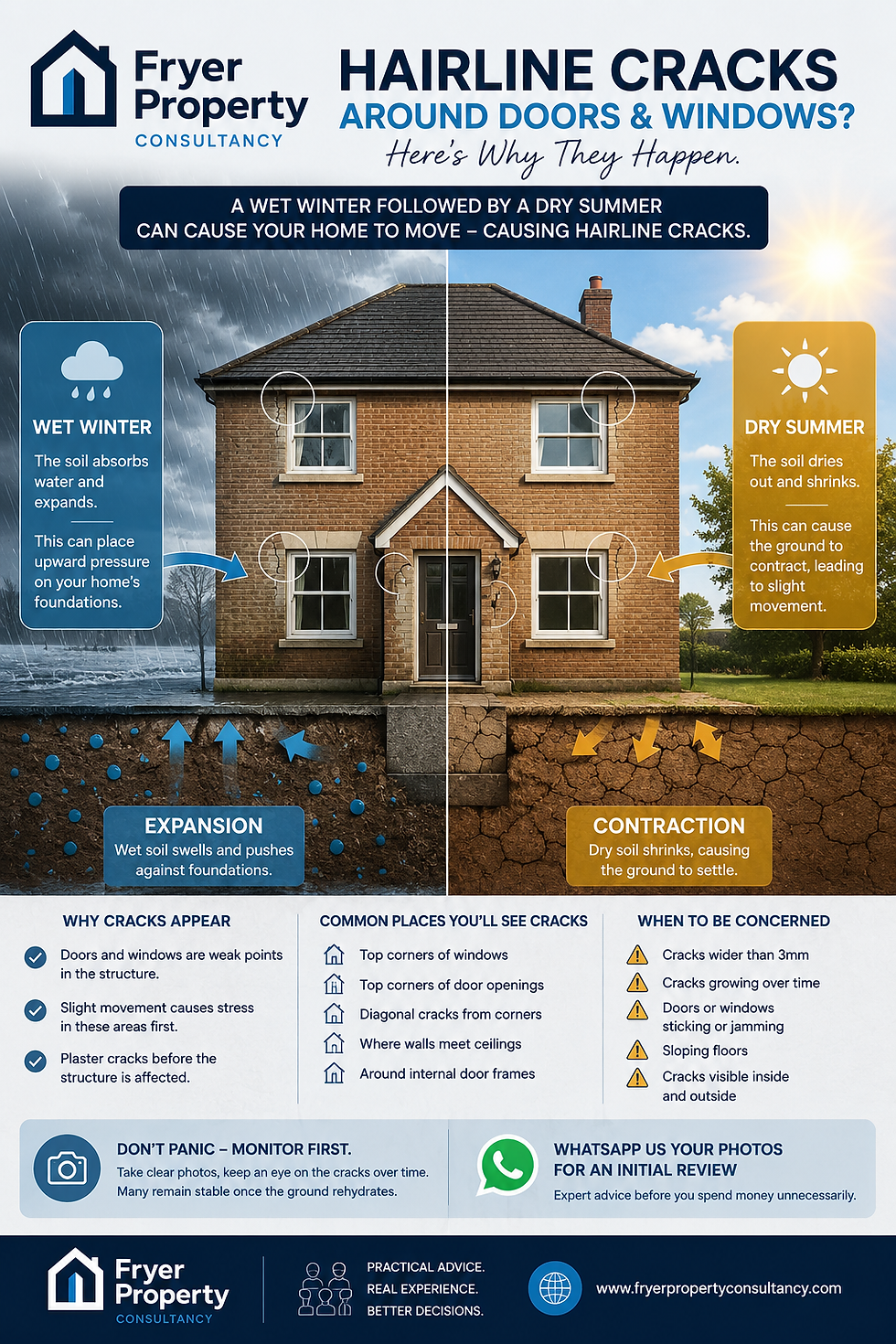
Each behaves differently. Clay, for example, expands when wet and shrinks during dry periods, which can lead to movement if foundations aren't designed correctly.
Is 900mm Deep Enough?
A standard foundation depth is often around 900mm, but this is only a starting point.
Building Control may require deeper foundations depending on:
The type of soil.
Nearby trees and their root systems.
Existing buildings.
Changes in ground level.
Previous ground disturbance.
In many cases, a structural engineer may also be required to design the foundations to ensure they are suitable for the conditions.
Trees Can Cost You Thousands
Large trees are one of the biggest reasons foundations become deeper than expected.
Tree roots remove moisture from the soil, particularly clay, causing movement. Building Control may require significantly deeper foundations or even root protection measures and specialist foundation designs.
If large trees are close to your proposed extension, it's worth identifying this before work starts so you can budget accordingly.
Hidden Drainage Can Be an Expensive Surprise
One project I worked on looked completely straightforward.
We began excavating the foundations only to discover that the proposed extension sat directly over a public sewer.
Everything stopped.
We had to involve Yorkshire Water to obtain permission before any work could continue. The extension had to be redesigned slightly, additional paperwork completed, specialist materials installed, and extra labour allowed for.
Before we had even started building the extension, this unexpected issue had added £2,850 to the project.
A simple drainage search before work began could have highlighted the risk much earlier, allowing the client to budget properly.
The Culvert That Changed Everything
On another project, we uncovered an old underground culvert that nobody knew existed.
This wasn't something we could simply build over.
The building line had to be moved, which meant revisiting the planning process due to the build line been moved. the foundations now needed to go much deeper to get below the culvert, large quantities of earth had to be excavated.
The excavation became so deep that trench bracing was required to keep the workforce safe. What had started as a relatively straightforward foundation dig quickly turned into a labour-intensive and expensive operation.
It was a perfect reminder that every site is different, and unexpected ground conditions can have a major impact on both programme and budget.
Why Surveys Are Worth the Money
Many homeowners see surveys as an unnecessary expense.
In reality, they can save thousands.
Drainage searches, utility plans, ground investigations and an experienced contractor can identify many of these risks before the first excavator arrives on site.
They won't eliminate every surprise, but they can significantly reduce the chances of costly delays and unexpected bills.
Experience Makes a Difference
One of the biggest values a good contractor brings isn't just building the extension—it's spotting potential problems before they become expensive ones.
An experienced contractor will assess the site, consider nearby trees, review drainage information, identify possible underground services, and discuss contingency costs before work begins.
That means fewer surprises and a much better understanding of the true cost of your project.
Final Thoughts
Building an extension is about far more than digging a trench and pouring concrete.
What's hidden beneath the ground can dramatically affect your build, your programme, and your budget.
By carrying out the right checks before work starts and working with experienced professionals, you can avoid many of the costly surprises I've seen throughout my career.
A little research at the beginning of a project could save you thousands of pounds later on.
Thinking of building an extension?
At Fryer Property Consultancy, we help homeowners understand the risks before work begins. From reviewing quotations and identifying hidden costs to explaining Building Control requirements and helping you plan realistic budgets, our aim is simple:
Save you time, reduce risk, and potentially save you thousands of pounds before the first shovel goes into the ground.



Comments